Both gently move teeth into better positions. The right choice depends on what needs correcting, your lifestyle and how much you value being discreet.
On this page5
How each one works
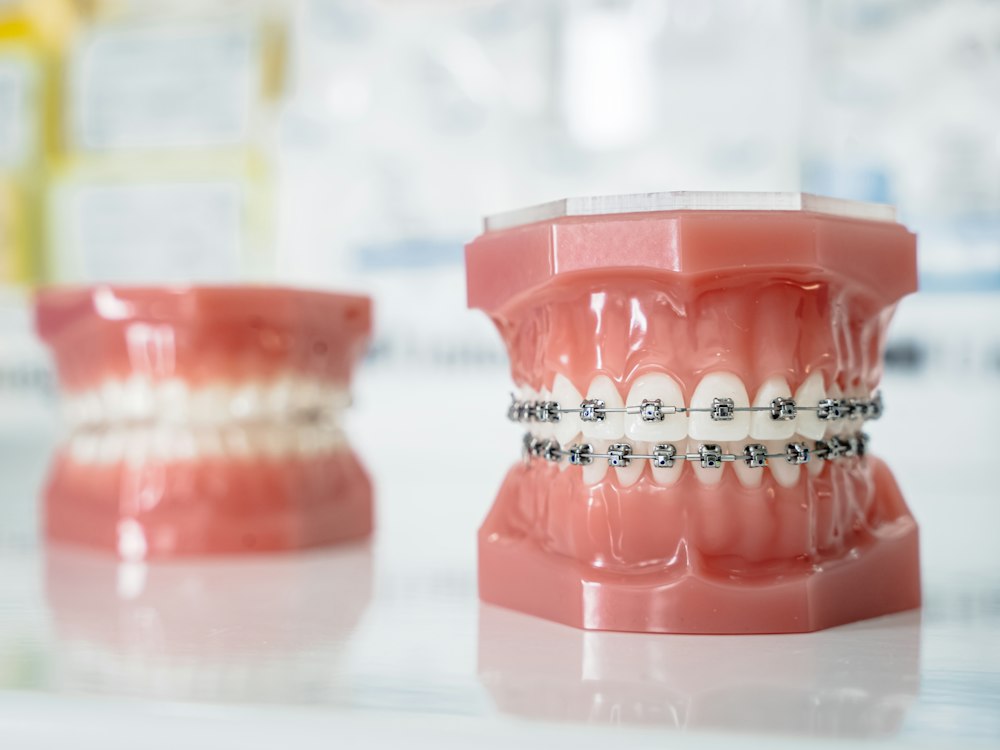
Traditional braces use brackets bonded to the teeth and a wire that applies steady pressure, adjusted at regular visits. Clear aligners are a series of custom, removable trays, each moving teeth a small amount before you switch to the next.
Comparing the two
- Appearance: aligners are nearly invisible; braces are visible, though ceramic options are subtler.
- Comfort: both can feel tight at first. Braces can irritate cheeks and lips; aligners are smoother.
- Eating: aligners come out to eat; braces mean avoiding some hard or sticky foods.
- Cleaning: aligners are removed to brush and floss; braces need extra care around brackets.
- Discipline: aligners only work if worn about 22 hours a day.
Which is better for what
Aligners suit many mild to moderate cases. More complex problems, such as significant bite issues or rotated teeth, may be treated more predictably with braces. Your orthodontist can advise based on a full assessment.
Cost and timeline
Treatment commonly takes from around six months to two years, depending on the case. Costs vary widely by location and complexity, and the two options are often in a similar range. Ask for a clear written quote.
Frequently asked questions
Are aligners as effective as braces?
For suitable cases, yes. Complex cases may do better with braces. A consultation will tell you which applies to you.
Can adults have braces?
Absolutely. Many orthodontic patients are adults.
Does it hurt?
Mild soreness for a few days after fitting or a new set is normal and usually settles quickly.
This guide is for general information and is not a substitute for professional dental advice. If you are worried about your oral health, speak to a dentist.